
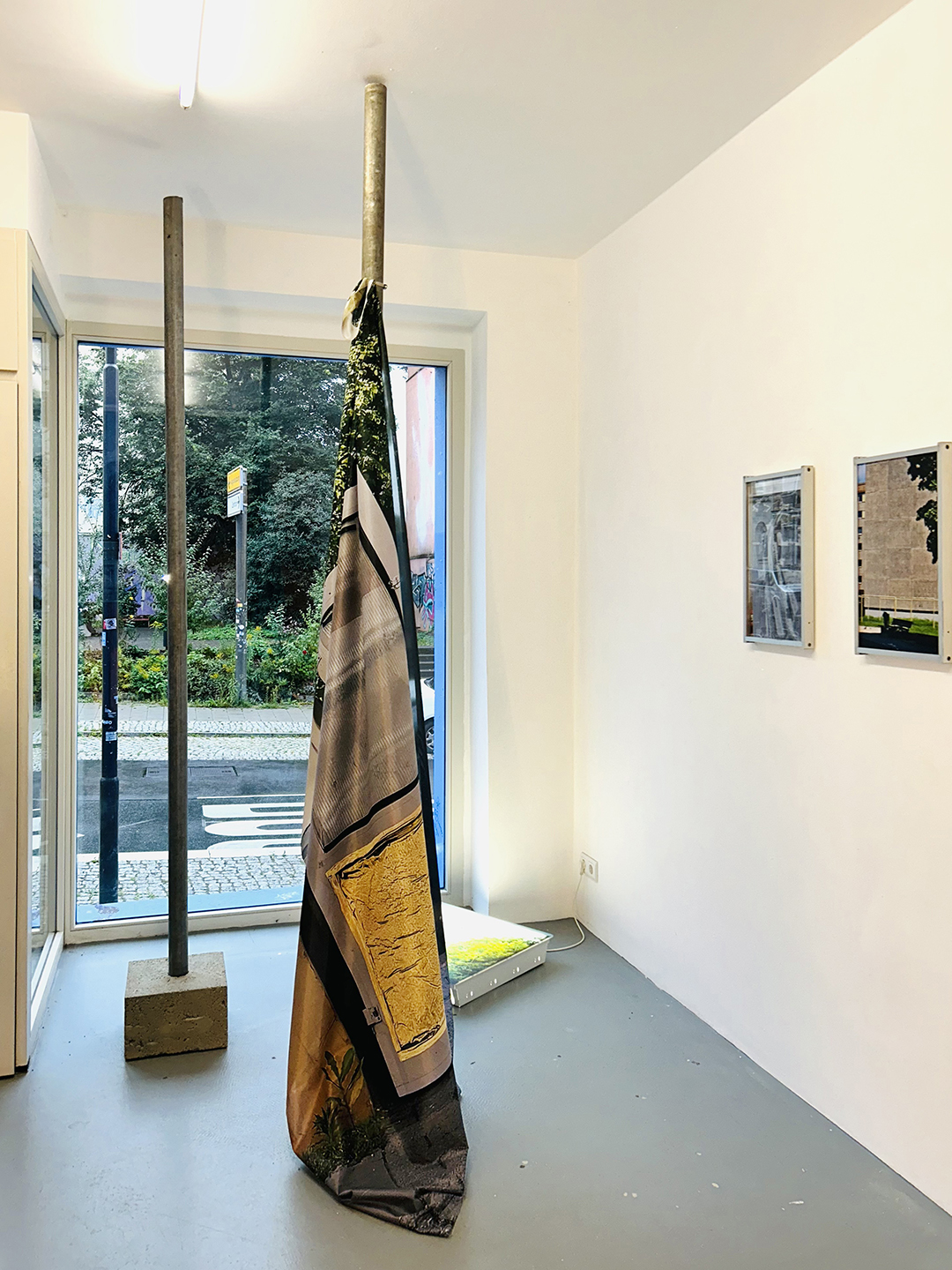
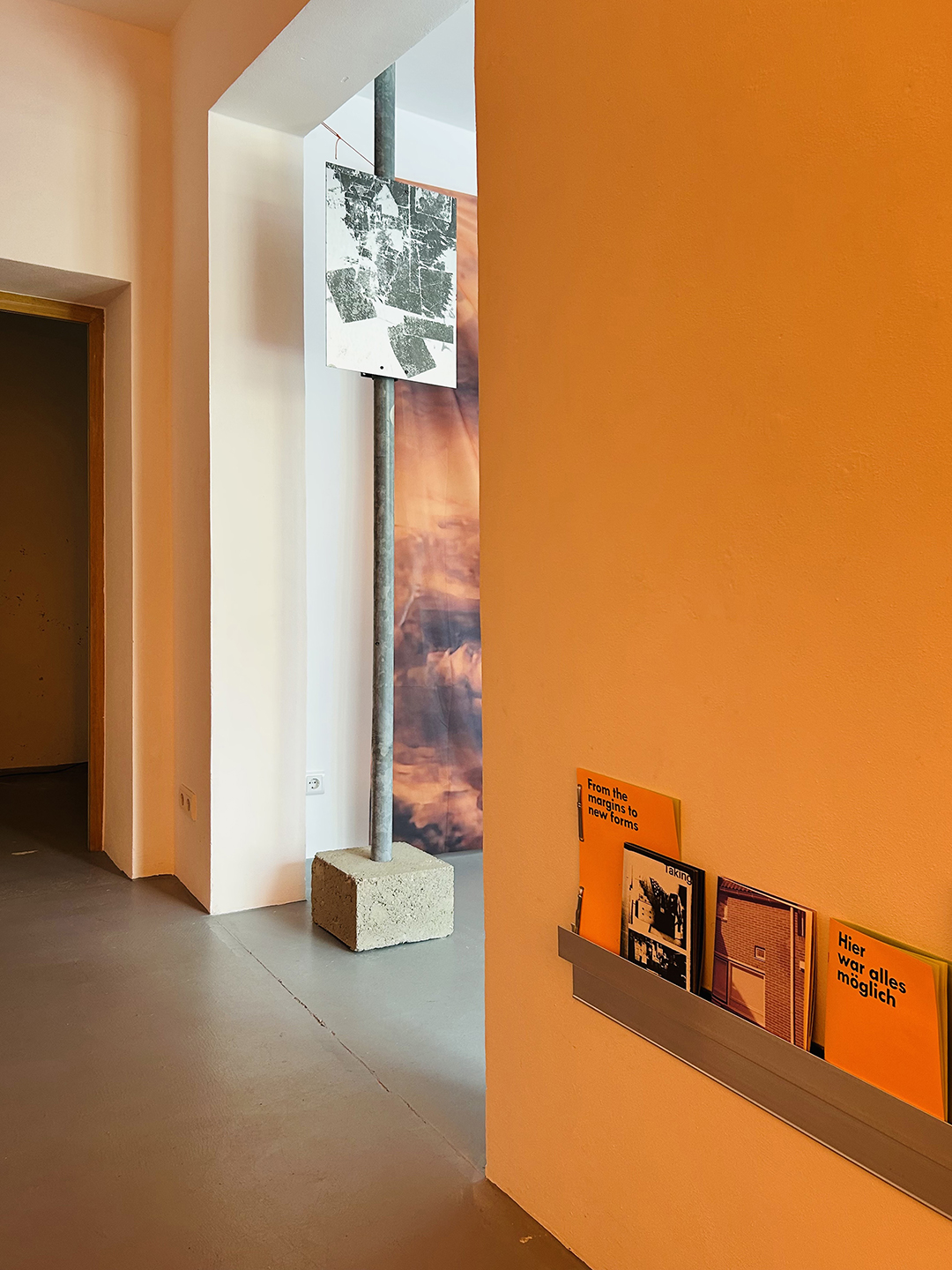


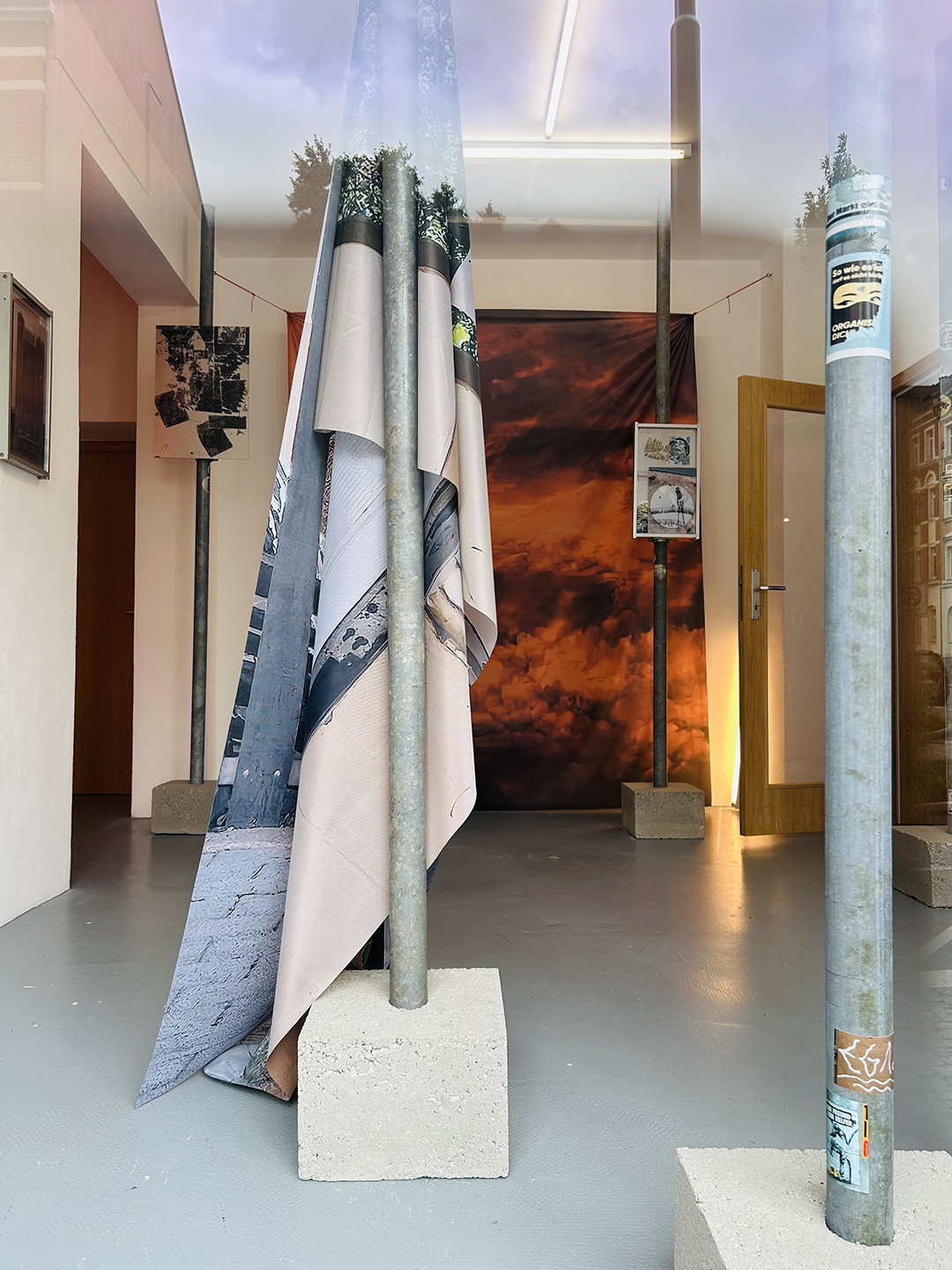

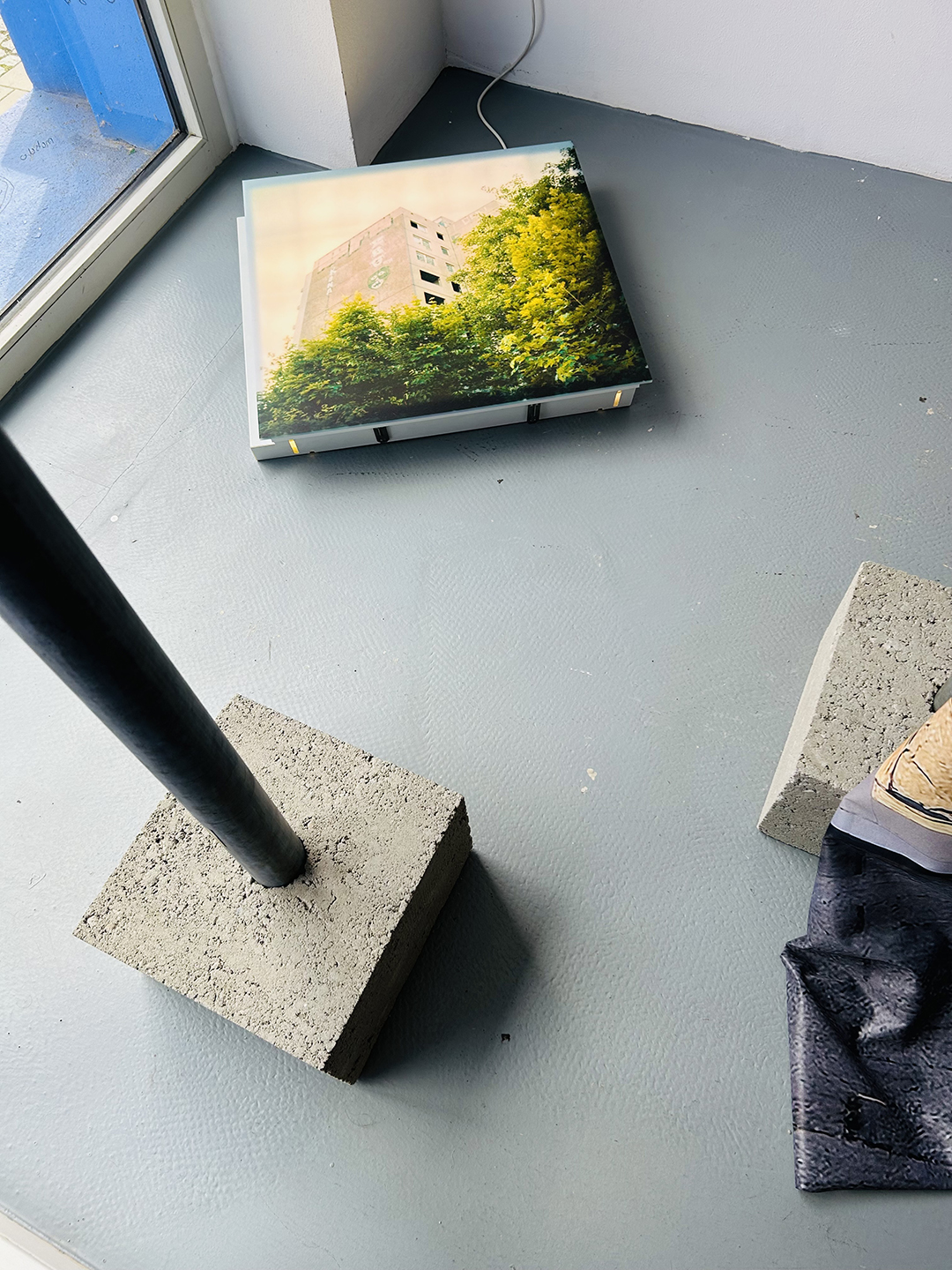
SMET (Matt Plezier and Setareh Noorani) presents BEFORE/AFTER, a showcase of two new site-specific installations at Galerie Glaskasten, Chemnitz Germany.
Even though Before and After invites a binary logic — like beginning and ending — the installation investigates this dichotomy and invokes contemplation on rhythm, repetition, and time. BEFORE / AFTER reads the history of a place as layered, and posits space as the condition for imagination.
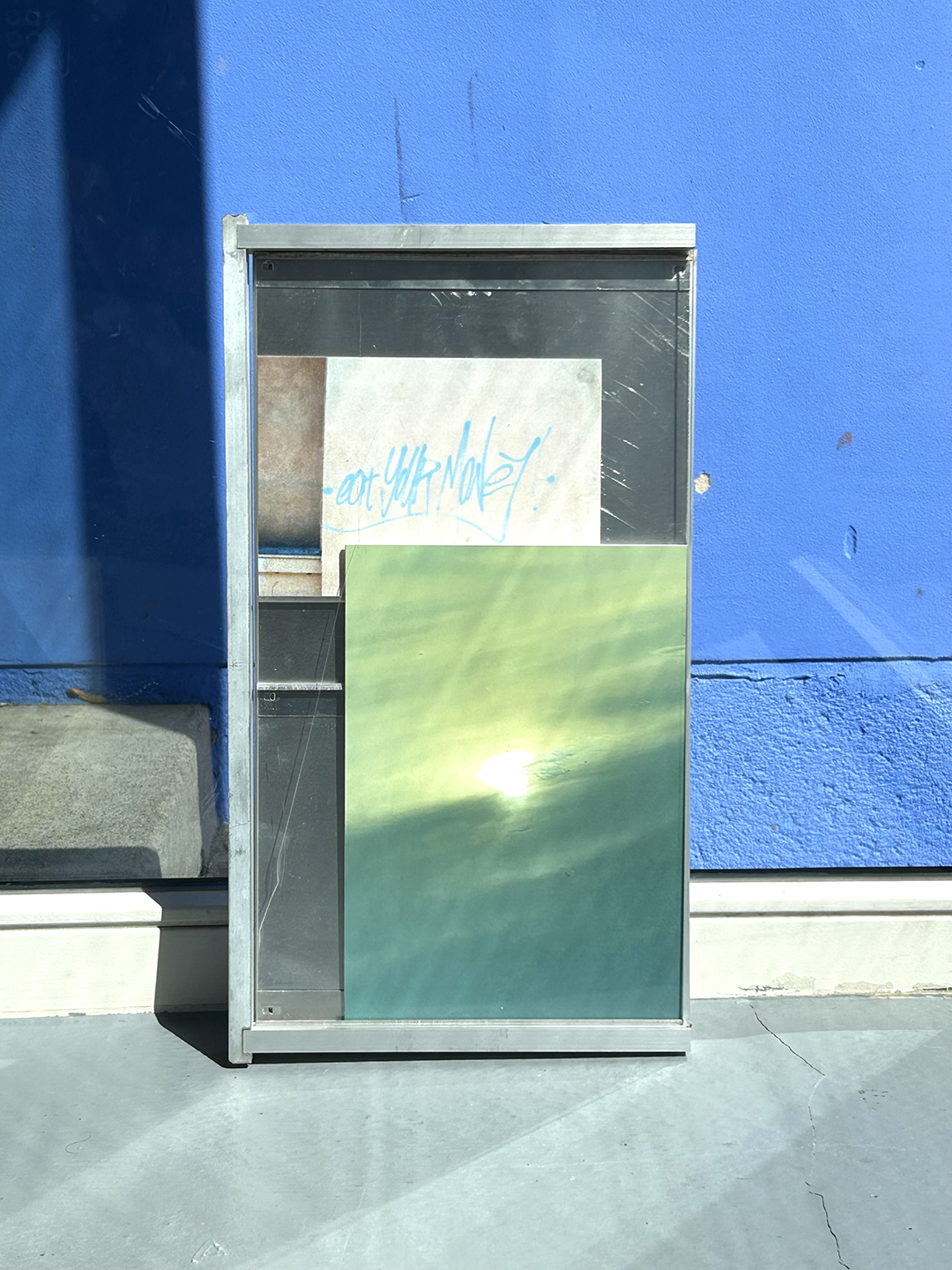
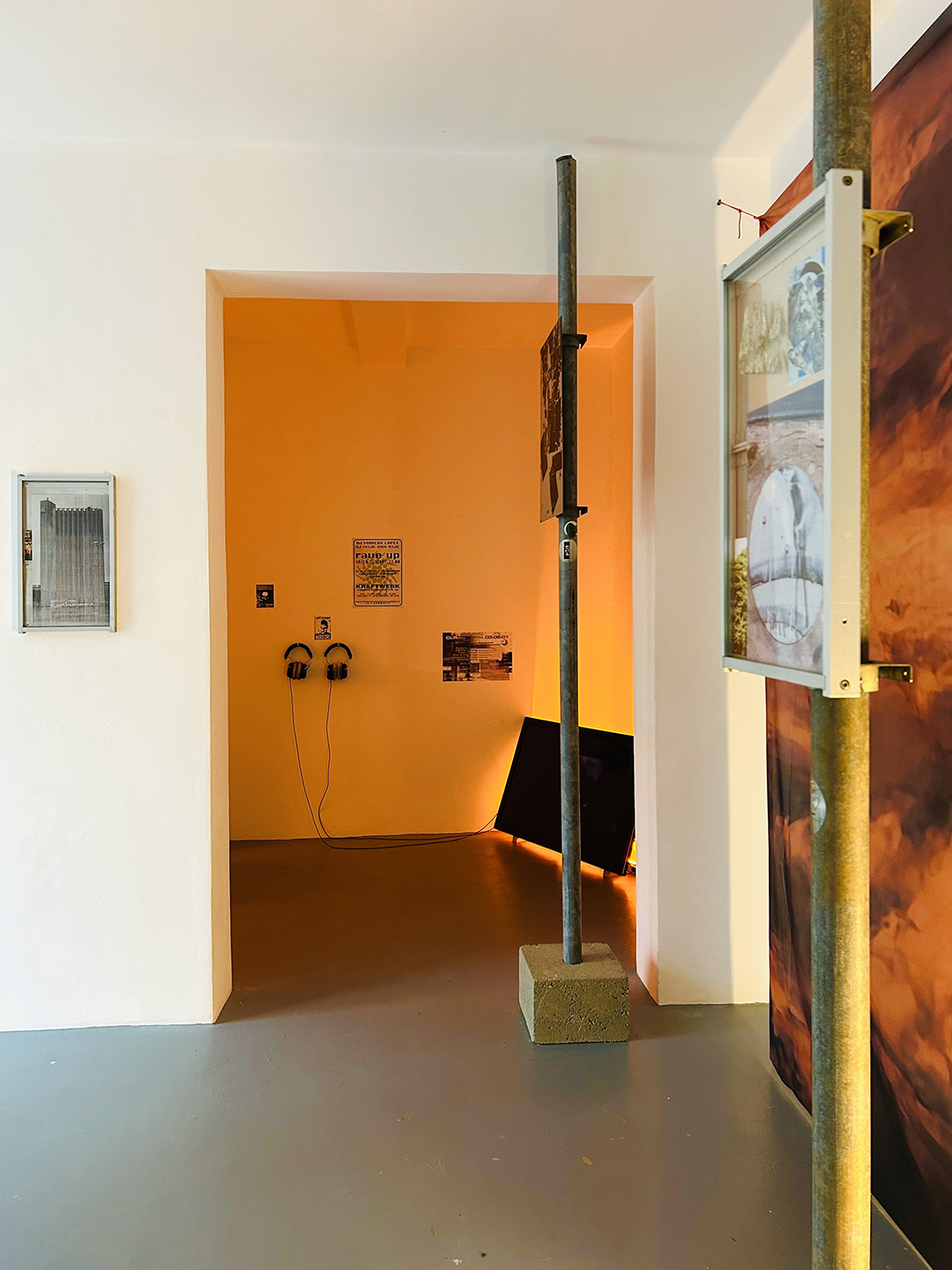
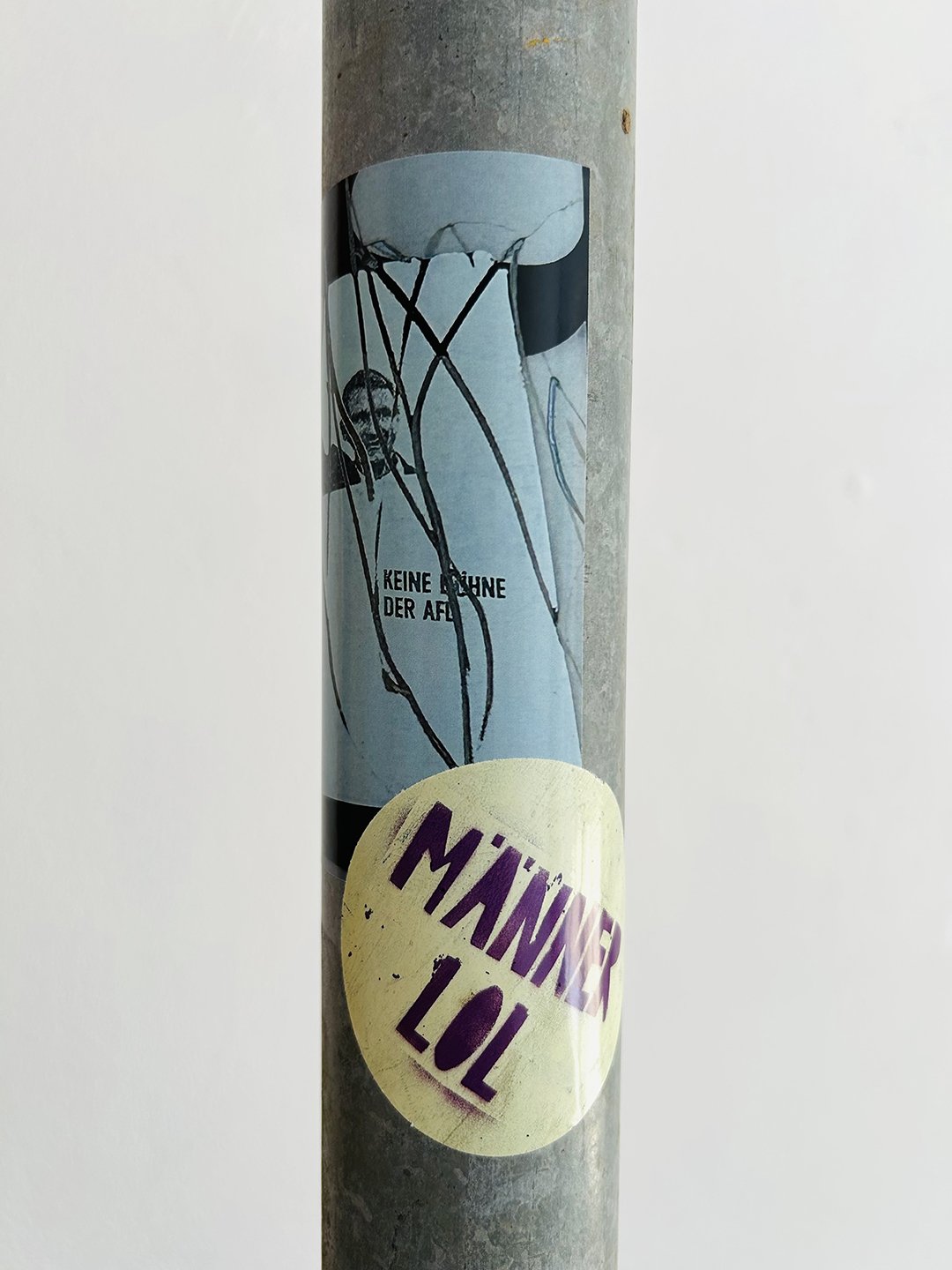
BEFORE features an installation that layers observations from a first visit to Chemnitz, making sense of the city by reading its rhythms and fragmented layers of public inhabitation. The installation takes found materials to transform the space into an archive annex diorama, looking into the city’s many ‘befores’—the identities, frictions, and absences that comprise its urban fabric. Through a combination of its spatial design, photography, sticker, graphic and print work, the installation abstracts observed typologies into a rendition of timeless furniture for the city. For time flows—as Bertolt Brecht noted: "Reality changes; in order to represent it, modes of representation must also change. Nothing comes from nothing; the new comes from the old, but that is why it is new."
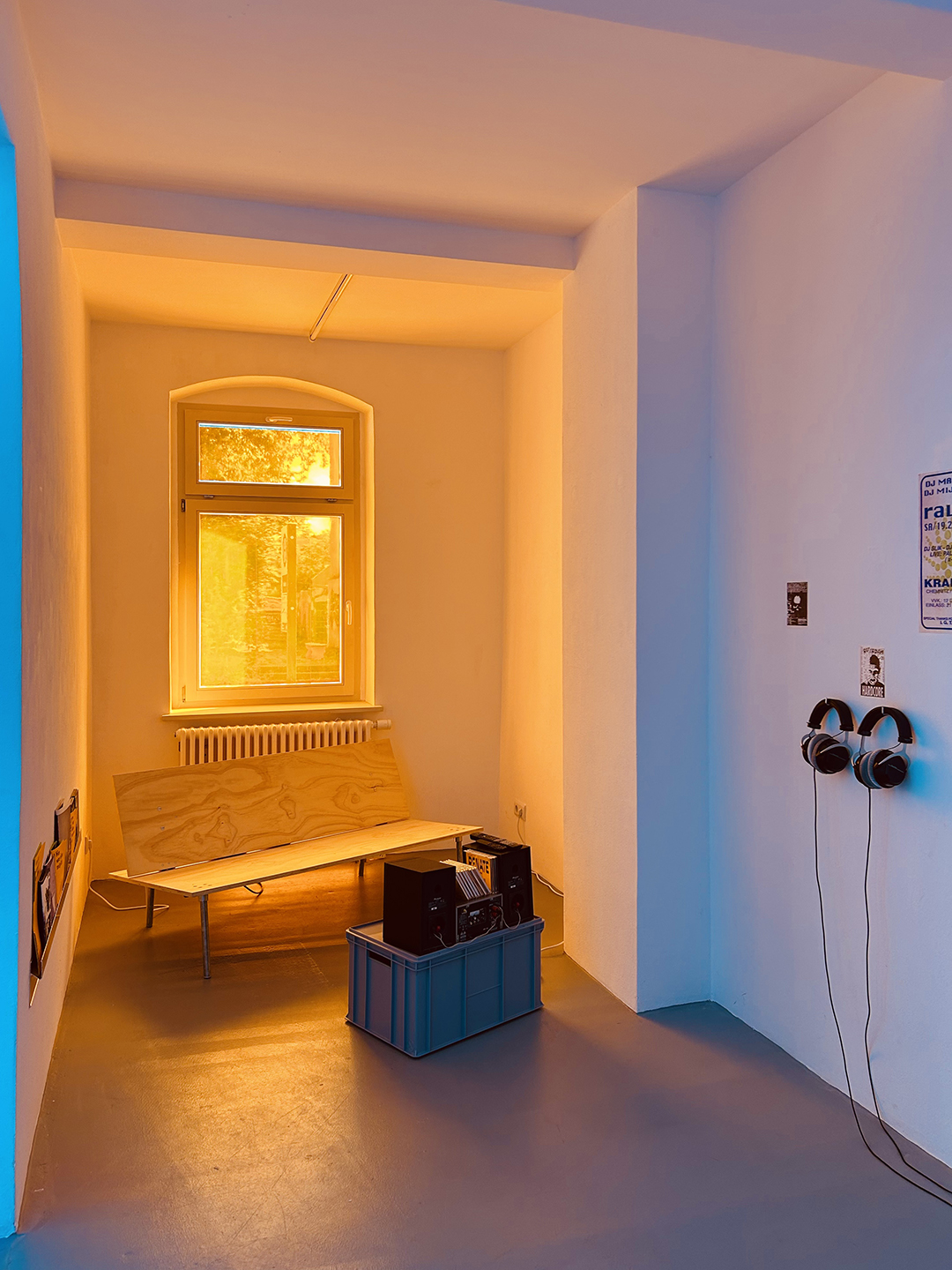
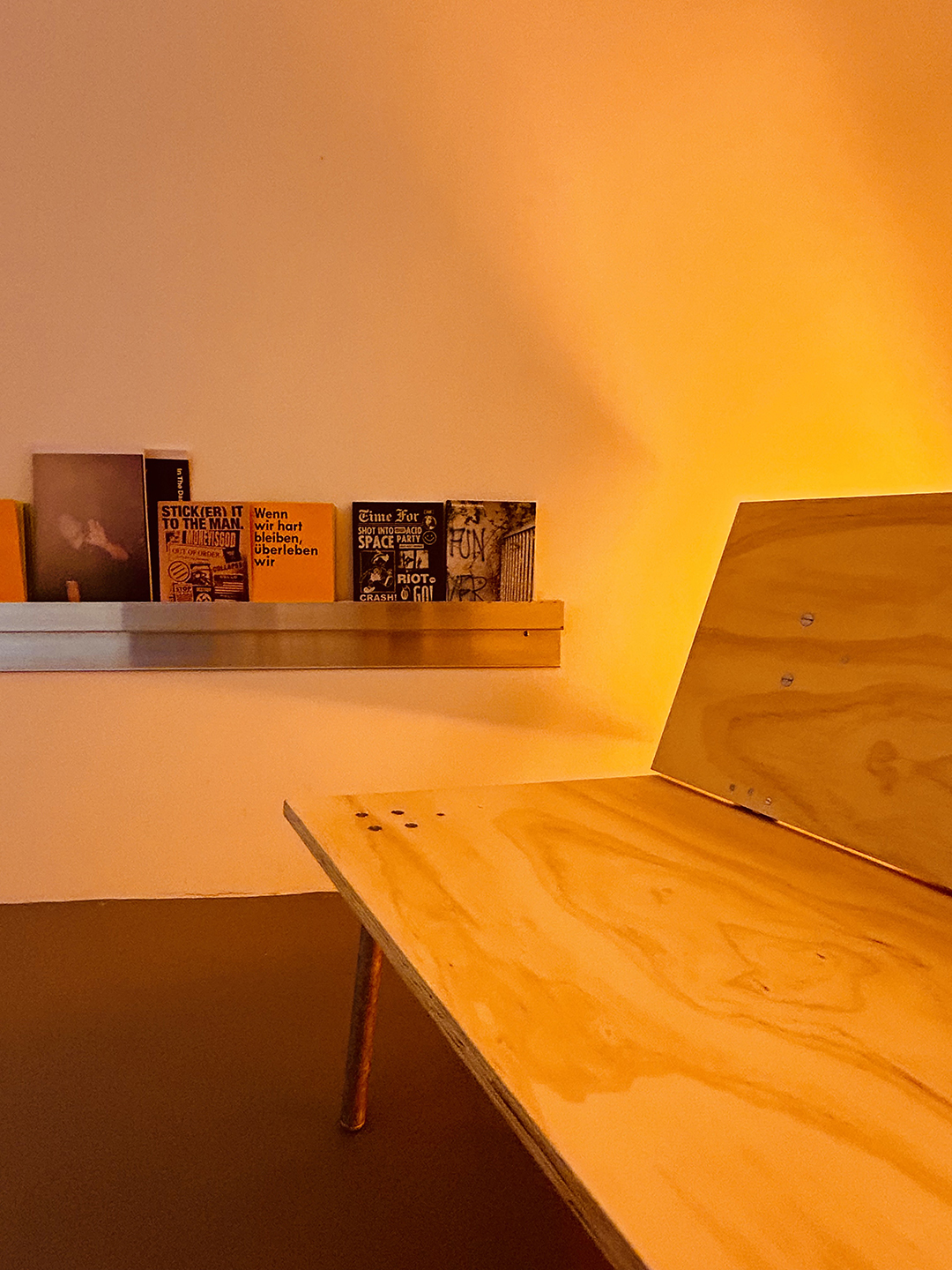
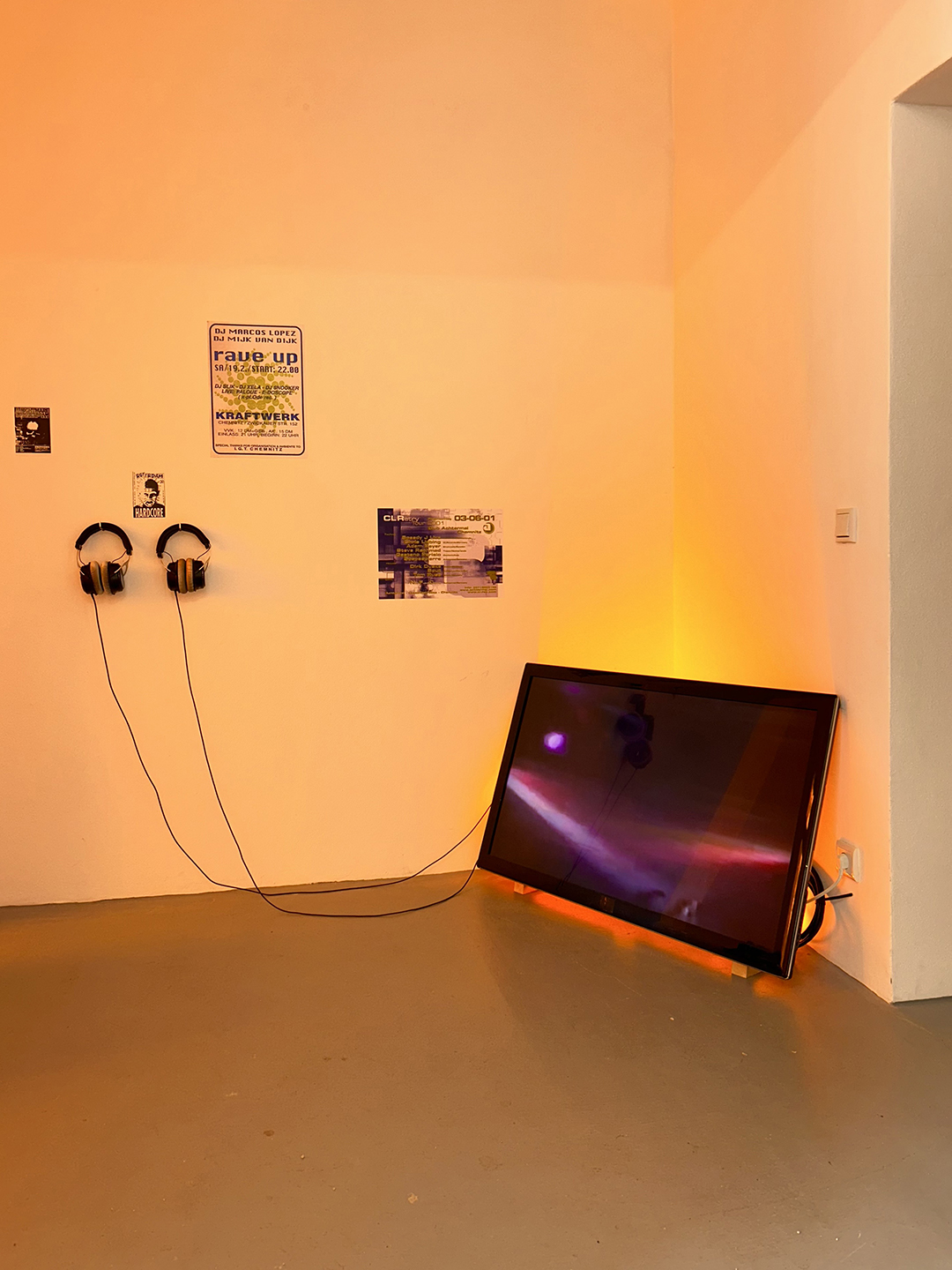
AFTER invites visitors to read, listen, and rest. Time is difficult to gauge, deliberately so; it slips and distorts. The orange glow that inhabits this space begs the question: is it sunrise or sunset? Do we share the same after, if we had similar dreams?
Chemnitz has undergone various major transformations over its existence. The fall of the Wall was such a moment, sparking a wave of underground clubs, techno and hip hop collectives, and artists claiming space in abandoned factories. For a time, Chemnitz — or perhaps it was still Karl-Marx-Stadt? — stood at the forefront of the electronic music avant-garde. It proved once again that groundbreaking ideas are self-organized, requiring only space and the freedom of the margins to thrive. Within this context, we present not only our shared practice engaging with underground music cultures, but also a renewed connection between Chemnitz and Rotterdam, as chronicled in the 1993 Chemnitzer Hakke zine.
_____
Spatial installation by SMET
Scenography and technical production by Jelmer Teunisen
